Read aloud by your device’s built-in voice. Nothing is sent over the internet.
For healthcare professionals
An overview of the CARE-PAC intervention, the evidence base, the work packages, and how to engage as a clinical site or referrer.
The clinical problem
People with life-limiting illness experience high symptom burden, frequent crises, and unplanned hospital admissions that often run counter to their preferences. Communication between patients, informal carers, and the multidisciplinary teams supporting them is fragmented across primary, secondary, community, and hospice services. Carer needs are routinely unmet.
CARE-PAC is a digital remote monitoring and support system designed to identify problems early, enhance communication, and enable timely, personalised intervention, alongside structured support for informal carers. It is being developed and evaluated through a structured research programme.
“I used it to sort of track my patients, because we were so busy and I was having to look at my time and think about who I needed to see the most. So I could look at their responses and think, well for him, things are pretty steady at the moment.” Healthcare Professional 5
“It would be great if everyone involved in my care could use the system and then I wouldn’t have to explain how things to my doctor, my oncologist, my CNS, they would all know.” Patient 3
The intervention in outline
The system has three connected components:
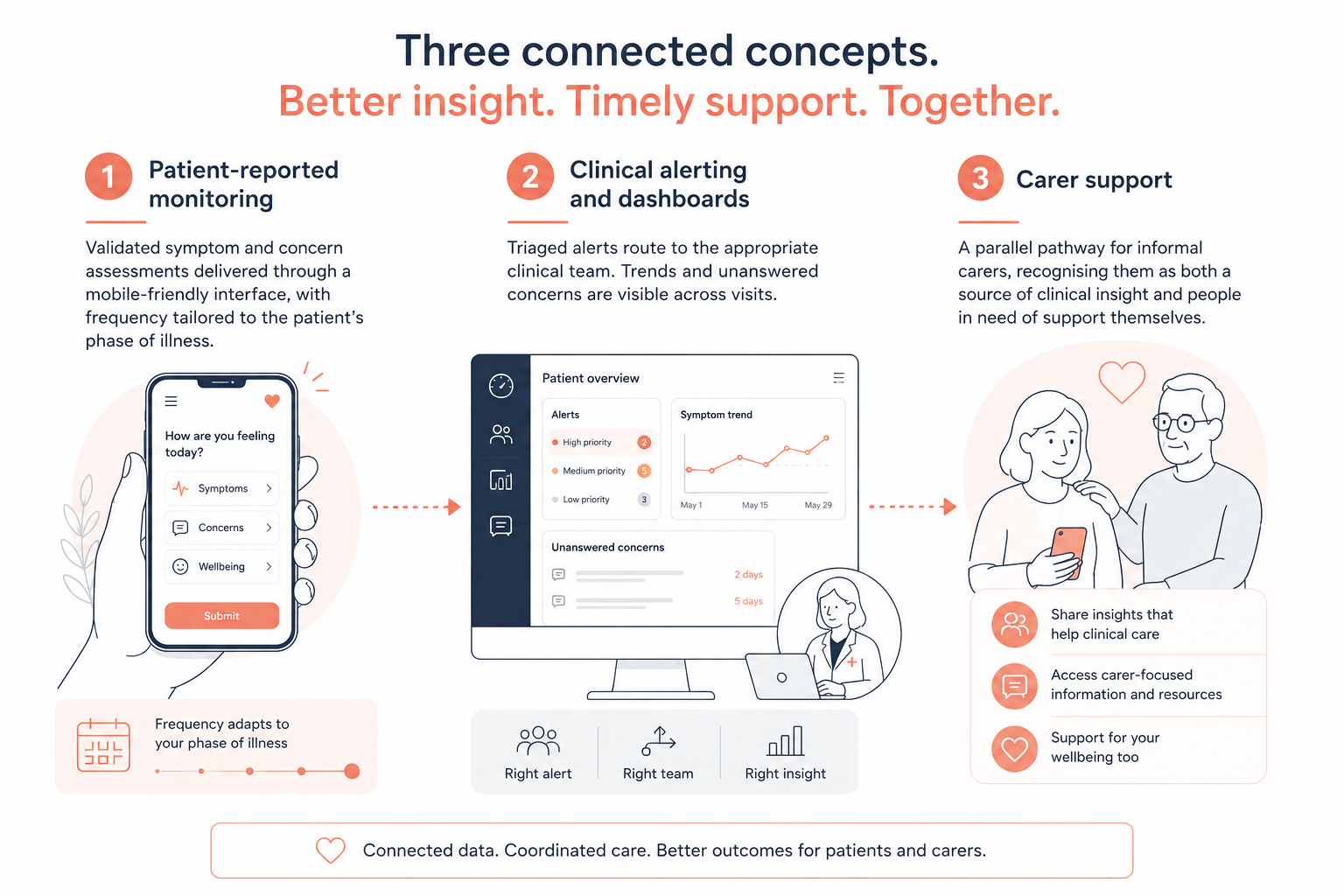
The CARE-PAC intervention in outline: three connected components: better insight, timely support, together.
- Patient-reported monitoring. Validated symptom and concern assessments delivered through a mobile-friendly interface, with frequency tailored to the patient’s phase of illness.
- Clinical alerting and dashboards. Triaged alerts route to the appropriate clinical team. Trends and unanswered concerns are visible across visits.
- Carer support. A parallel pathway for informal carers, recognising them as both a source of clinical insight and people in need of support themselves.
- Share insights that help clinical care.
- Access carer-focused information and resources.
- Support for your wellbeing too.
Connect data, coordinated care, better outcomes for patients and carers.
Where it sits in the care pathway
CARE-PAC is designed to integrate with, not replace, existing palliative and end-of-life care pathways. It augments routine review, supports earlier intervention between contacts, and provides a structured channel for patient and carer voice. The intent is interoperability with existing systems where the local context allows it.
The trial
Following a structured co-production phase, CARE-PAC will be evaluated in a randomised controlled trial across multiple UK clinical sites and settings. Approximately 200 patients with life-limiting illness will take part. Pre-registered outcomes include:
- Patient outcomes: symptom burden, quality of life, healthcare utilisation patterns.
- Carer outcomes: experiences and support needs.
- Implementation outcomes: acceptability, fidelity, and integration into routine practice.
Detailed protocol and statistical plans will be published as the project progresses. See Trial governance for current registration and ethics status.
Work packages
The project is structured around five interlocking work packages:
Co-production & user-centred design
Iterative workshops with patients, carers, and clinicians to shape content, functionality, and integration.
System development
Building the digital platform, with a focus on accessibility, security, and clinical fit.
Randomised controlled trial
Multi-site evaluation across primary, secondary, community, and hospice settings.
Health economics
Cost-effectiveness analysis to support commissioning decisions if the intervention proves effective.
Implementation & commercialisation
Pathways to scale and sustainability, including alignment with regulatory and market requirements.
Want to be involved?
Whether you are a clinician interested in trial sites, a researcher exploring collaboration, or a patient or carer who would like a voice in shaping the system, we would love to hear from you.
Contact the team